Court-Admissible Concussion Evidence: What PI Attorneys Should Know About Eye Movement Testing
![[HERO] Court-Admissible Concussion Evidence: What PI Attorneys Should Know About Eye Movement Testing](https://cdn.marblism.com/FrhsiXZ_dHh.webp)
Your client walked away from a rear-end collision with a splitting headache, memory fog, and balance problems that won't quit. The ER doc ordered a CT scan. Then an MRI. Both came back clean. Defense counsel sees those normal imaging results and immediately positions your case as subjective complaints from someone chasing a settlement.
This scenario plays out in personal injury firms across the country every single day. Mild traumatic brain injuries don't show structural damage on traditional imaging: yet the neurological disruption is absolutely real, measurable, and now provable in court.
The "Clean MRI" Problem That's Killing Strong TBI Cases
Standard neuroimaging captures structural damage. Brain bleeds. Skull fractures. Tissue tears. But concussions operate at the functional level, disrupting the intricate neural pathways that control everything from memory to eye movement coordination. Traditional MRI and CT scans miss this entirely.
Defense attorneys exploit this gap relentlessly. They position your client's symptoms as exaggerated, psychosomatic, or outright fabricated. Without objective medical evidence to counter those narratives, even legitimate concussion cases collapse under the weight of "normal" imaging results and skeptical juries who've been conditioned to believe brain injuries require visible damage.
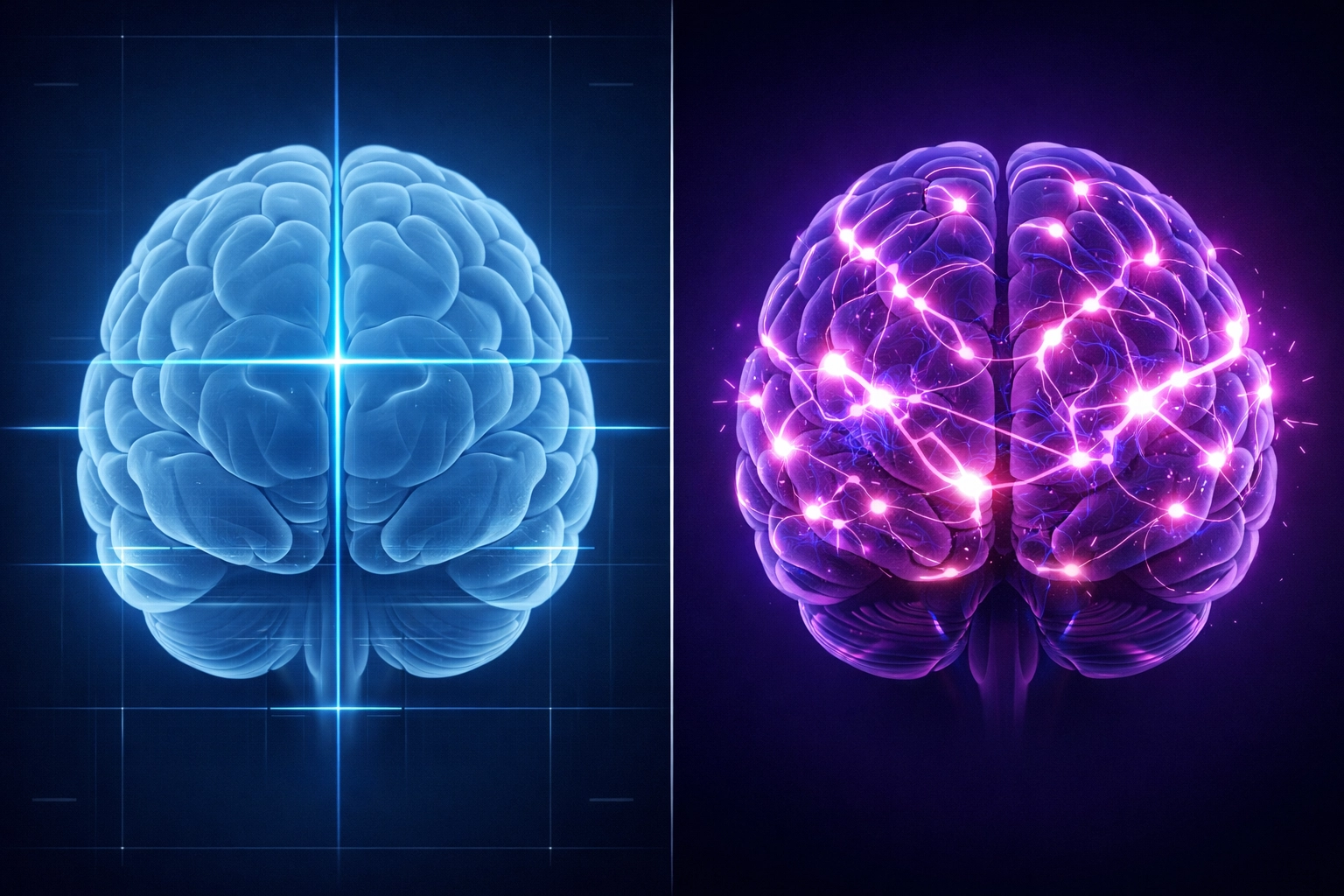
The legal landscape demands objective, quantifiable evidence. Symptom checklists and patient-reported complaints don't carry the evidentiary weight needed to establish causation, demonstrate severity, or justify significant damages. You need diagnostic tools that detect functional neurological disruption and produce court-admissible data that survives Daubert or Frye challenges.
Eye Movement Testing: Objective Measurement of Neurological Function
Ocular motor testing measures how the brain controls eye movements. When a concussion disrupts central nervous system pathways, eye tracking abnormalities emerge as measurable, quantifiable indicators of neurological dysfunction. These aren't subjective symptoms: they're objective data points captured through advanced algorithms that detect impaired eye rotation capabilities.
The technology tracks eye movements while patients watch a moving video target for approximately 220 seconds. Sophisticated algorithms analyze the data, identifying disruptions in the neural pathways controlling smooth pursuit, saccades, and vergence: all functions that require intact brain connectivity. The test detects both the presence of neurophysiologic disruption and correlates disconjugate gaze severity with symptom intensity.
Here's the game-changer: this testing requires no baseline comparison. Your client doesn't need pre-injury data. The diagnostic approach compares test results against normative databases rather than individual baselines, making it applicable even when pre-injury measurements don't exist: which covers virtually every personal injury case you'll encounter.
FDA Clearance: The Court Admissibility Advantage
FDA clearance establishes a regulatory foundation that strengthens admissibility arguments considerably. The FDA has approved eye movement tracking technology as an aid in concussion diagnosis for patients ages 5-67 within one week of head injury. This regulatory validation demonstrates the scientific community recognizes eye tracking as a legitimate diagnostic tool backed by rigorous clinical testing.
Courts increasingly accept that eye tracking tools are "now largely recognized in the medical community" as aids for diagnosing traumatic brain injuries, particularly where traditional imaging reveals no structural damage. This medical consensus matters enormously when establishing reliability under Daubert standards or general acceptance under Frye.
Contrast this with other diagnostic tools that face persistent admissibility challenges. Quantitative EEG evidence has been largely rejected across jurisdictions, with courts finding it unhelpful and inadmissible under both Frye and modern evidence rules governing expert testimony. SPECT scans initially faced similar barriers and continue to encounter skepticism when presented as primary diagnostic instruments.
Eye movement testing occupies stronger evidentiary ground. Research demonstrates baseline-free eye movement tracking algorithms deliver sensitivity and specificity useful as objective aids in concussion diagnosis, particularly within two weeks of injury. This clinical validation, combined with FDA clearance, creates a compelling foundation for admissibility arguments.
Navigating Daubert and Frye Standards Successfully
Understanding how courts evaluate novel scientific evidence determines whether your ocular motor testing results make it past evidentiary challenges or get excluded before the jury ever sees them.
Under Daubert, judges act as gatekeepers evaluating whether expert testimony rests on reliable scientific foundation. Courts examine testing methodology, peer review publication status, known error rates, and general acceptance within relevant scientific communities. Eye movement testing satisfies these criteria through published clinical research, FDA regulatory review, and growing medical consensus around its diagnostic utility.
Frye jurisdictions require general acceptance within the relevant scientific community. The expanding use of eye tracking technology in concussion clinics, emergency departments, and specialized TBI centers demonstrates this acceptance. Medical literature increasingly references ocular motor testing as a validated diagnostic aid, strengthening general acceptance arguments.
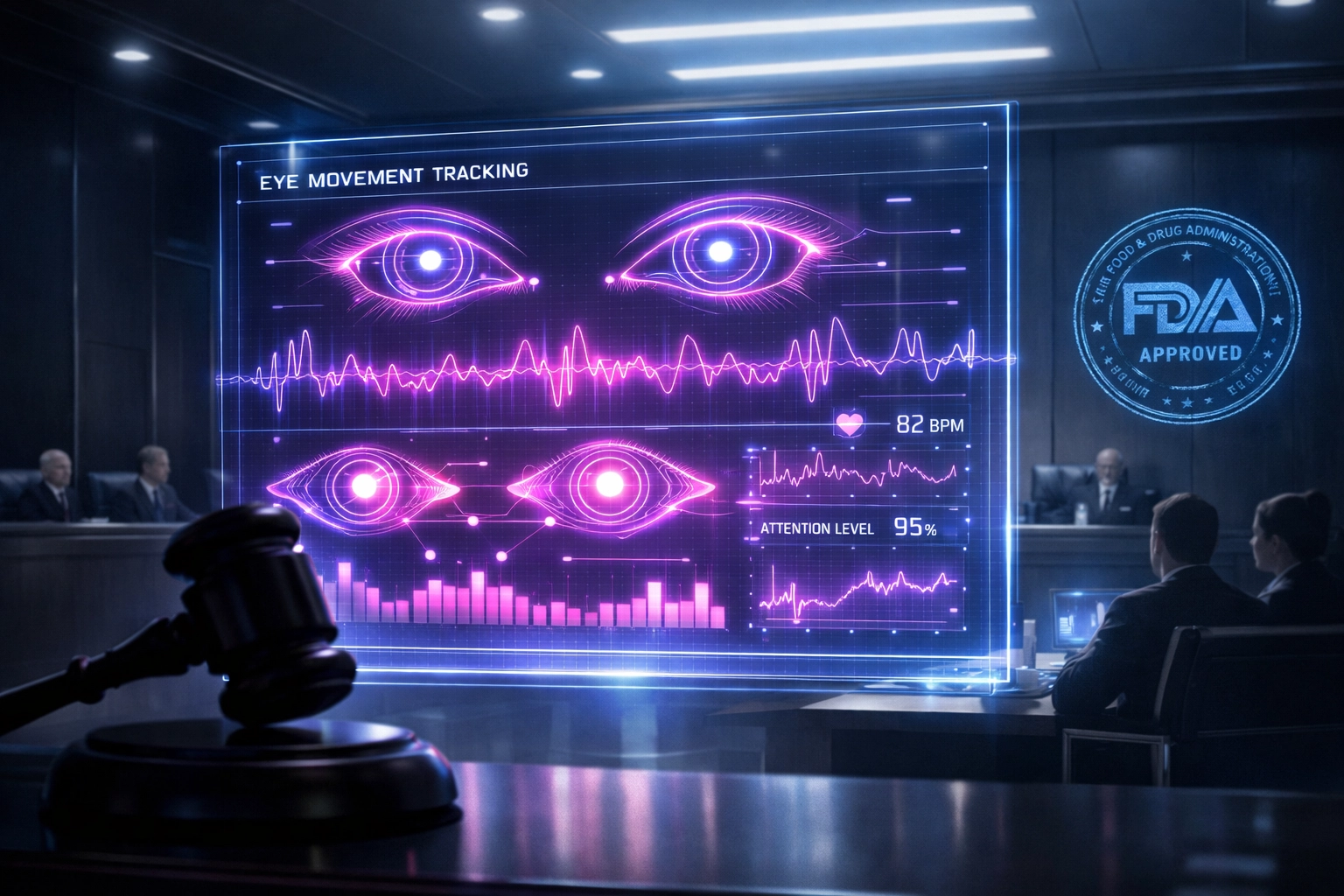
Strategic presentation matters as much as the underlying science. Courts respond more favorably when eye movement testing appears as corroborating evidence supporting comprehensive clinical evaluation rather than a standalone diagnostic tool claiming to definitively prove brain injury by itself. Position the testing as one component within a multifaceted diagnostic approach that includes clinical history, symptom assessment instruments, neurological examination, and physician evaluation.
Strategic Implementation: Maximizing Evidentiary Impact
Present eye movement test results within a comprehensive medical evidence framework. Pair objective eye tracking data with traditional diagnostic elements: documented clinical history, standardized symptom assessment tools like SCAT5, detailed neurological examinations, and cognitive testing results. This integrated approach demonstrates thorough evaluation while positioning eye movement data as objective confirmation of clinical findings.
Emphasize the functional disruption angle. Defense counsel will argue your client suffers from anxiety, depression, or malingering rather than traumatic brain injury. Eye movement testing detects neurological dysfunction without claiming to distinguish between every possible condition. Present the data as evidence of disrupted brain function: objective measurement that corroborates documented symptoms and clinical observations.
Avoid overstatement. Courts reject expert testimony that claims more than the science supports. Position eye movement testing accurately: an FDA-cleared diagnostic aid that measures objective neurological function, provides quantifiable data, and supports clinical diagnosis when integrated with comprehensive medical evaluation. This measured approach builds credibility while avoiding the pitfalls that have derailed other diagnostic technologies.
Include severity correlation. Eye tracking algorithms don't just detect presence or absence of dysfunction: they quantify severity by measuring the degree of disconjugate gaze disruption. This severity measurement correlates with symptom intensity, providing objective data that supports damages calculations and demonstrates ongoing impairment even months or years post-injury.
Building Your Evidence Package
Construct your medical evidence chronologically, demonstrating how eye movement testing fits within the diagnostic timeline. Document initial presentation, clinical evaluation, traditional imaging results, and subsequent ocular motor testing. This sequence shows comprehensive evaluation rather than cherry-picking diagnostic tools that support your case while ignoring others.
Work with medical experts who understand both the technology and courtroom requirements. Your expert witness needs to explain eye movement testing methodology clearly, articulate its scientific foundation confidently, and withstand cross-examination about limitations and alternative explanations. Choose experts with experience presenting ocular motor evidence in legal proceedings whenever possible.
Prepare for predictable defense challenges. Opposing counsel will question whether eye movements might reflect pre-existing conditions, medication effects, fatigue, or lack of effort rather than traumatic brain injury. Strong cases address these alternative explanations proactively through comprehensive medical history review, medication analysis, and testing protocols designed to detect insufficient effort.
The Evidentiary Advantage in Action
Eye movement testing transforms "he-said-she-said" concussion cases into objectively documented neurological injuries. When defense counsel points to clean MRI results and suggests your client is exaggerating symptoms, you counter with quantifiable data showing disrupted neural pathways controlling eye movement: functional impairment that traditional imaging can't detect but FDA-cleared technology measures precisely.
This objective evidence strengthens settlement negotiations considerably. Defense counsel and insurance adjusters recognize that juries respond to concrete medical data far more favorably than symptom complaints alone. Eye movement test results shift case evaluation from subjective credibility battles to objective neurological findings that demand serious settlement consideration.
The combination of FDA clearance, growing medical acceptance, published clinical validation, and baseline-free methodology creates powerful evidentiary advantages for personal injury attorneys handling mild traumatic brain injury cases. Courts increasingly recognize that functional brain injuries require functional testing: and eye movement analysis delivers exactly that.
For more information about integrating objective concussion diagnostics into your personal injury practice, visit ArkLaTex TBI.
